What is off-page SEO?
Off-page SEO refers to actions taken outside a website. These actions are intended to improve the website’s visibility in search engine results, especially Google. The direct effect of following off-page SEO principles is to improve the website’s ranking.
Off-page SEO is a very good indicator of how the world (other websites and users) perceives a particular website. A website that focuses on producing high-quality, SEO-friendly content is more likely to receive references and referrals (backlinks) from other websites. These backlinks, by improving the website’s ranking, will increase social media exposure and drive more users to the site.
In general, search engines use links for two things:
- Discover new pages or updates to a website.
- How to determine a website’s ranking in search results.
Search engines monitor websites and crawl their pages, reading and classifying content based on their algorithms and indexing criteria. Using their artificial intelligence algorithms, search engines evaluate the quality of the content on a page and determine the ranking of keywords and pages by controlling the number and origin of links that refer to the page in question. The more high-level websites link to the website in question, the higher the website’s rank and the higher the website’s position and value in the search results list.
What are the benefits of off-site SEO?
Various methods are used to manage and implement external SEO. As a website’s credibility and ranking increase, Google’s intelligent search engine comes to believe it publishes useful, high-quality content and is reliable. This credibility will result in the site being displayed repeatedly in Google search results. Producing SEO content causes more users to visit the website and increases sales of goods and services.
This process is an endless sequence of events that keeps the cost of producing SEO content and ordering website content production affordable. Increasing the number of visitors introduces the website to new audiences and channels, improving its ranking by confirming its authenticity. On the other hand, producing SEO-optimized content and regularly reviewing the website helps strengthen its rankings and build user trust.
Google has recently introduced a concept called trustworthiness. This concept refers to establishing a relationship of trust and maintaining that relationship between a website and its users. User trust in the website and the website’s trustworthiness in relation to its users play an important role in determining the website’s ranking and are directly related to off-page SEO.
Simply put, Google wants to show websites in its search results that have proven their skills and ability to produce quality content and publish SEO-friendly content, both through the number of visitors and through endorsements from other websites. For example, if you want to be recognized as an expert on a topic, it is not enough to produce quality content and make this claim yourself; other websites related to your field of expertise must agree to provide content production services and publish SEO-friendly content in accordance with your claim. Such agreement is demonstrated and evaluated through links pointing to your website.
What is link building in off-page SEO?
Link building is one of the most popular and effective off-page SEO techniques. In this method, links to a specific website are used to encourage visitors to visit it. Each visitor who enters via these links is like a positive vote for that website. These votes improve the website’s ranking and help it move ahead of competitors. For example, if someone likes this article and links to it on their website or blog, it signals to search engines that this page has valuable information.
What is a good link in external SEO?
If you ask Google what makes a good link, it will answer: “Links pointing to your website should be natural links.” Natural links are exactly what the name suggests. A website owner or blogger prefers SEO-friendly content and naturally adds a link to their blog.
In other words, it is no longer important how many links point to your website, but it is more important where these links come from. A good link is one that points to the website from a credible source. The best way to attract high-quality links is to produce high-quality, SEO-optimized content that others like, use, and refer to.
Link building means creating links, or in other words, backlinks from other sites to your site. Backlinks, also known as links, are tools that allow users to navigate between different pages and access the information they want.
Search engines also use links to monitor and crawl web pages. Search engines detect links with their spider algorithms. They use links to navigate between pages on a website and between sites.
Note: If you try to use tricks to create artificial and fake links, you will end up with a penalty instead of a ranking boost (especially in the case of Google).
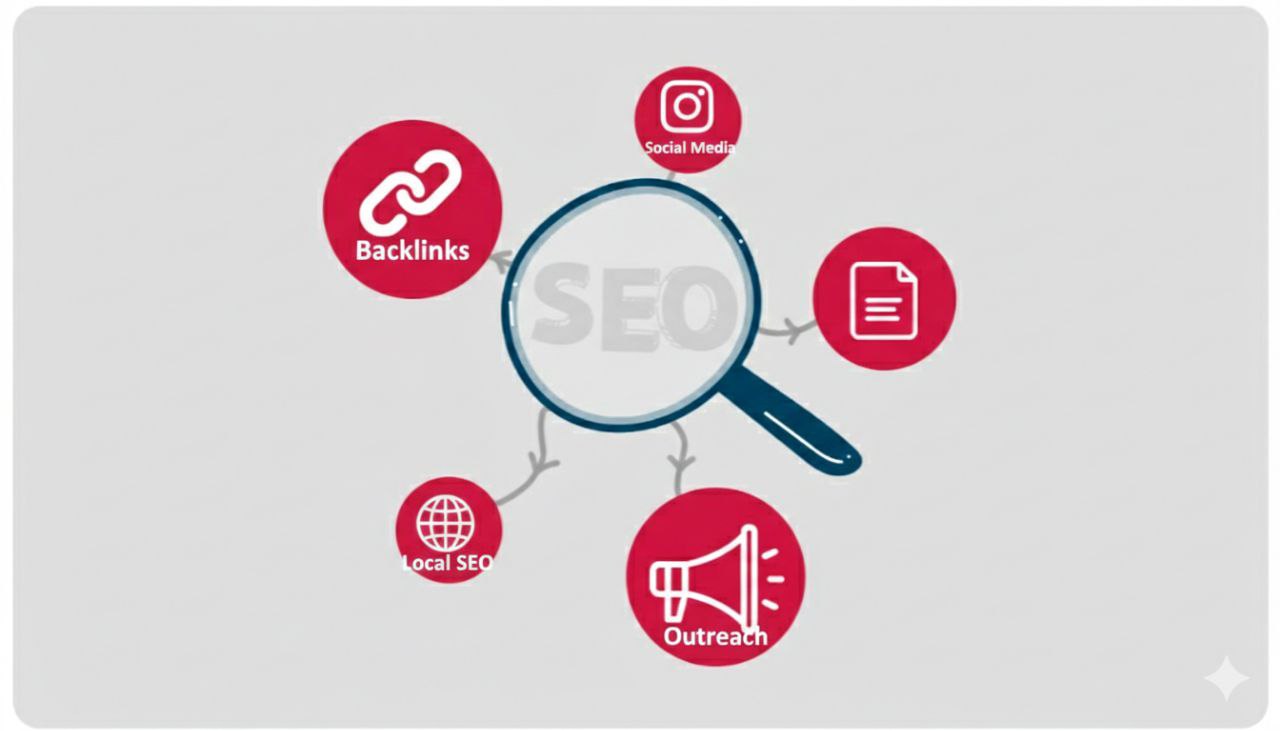
13 Off-Page SEO Techniques in 2025
Below, we’ll explain these 13 tactics so you can use them to promote your brand and drive more organic search traffic in 2025.
- External link building
- Branding
- Content Marketing
- PR
- Local SEO
- Social networks
- Forums
- Influencer Marketing
- Events
- Guest post
- Podcast
- Review
- Content Syndication
- Linkpromex
-
Link building in external SEO
Link building is a key part of an off-page SEO strategy due to its value in Google’s algorithms. Three practical methods for off-page link building are:
- Advertisement Reportage: You can publish valuable and unique content in reputable media outlets related to your business and link to your site.
- Backlinks: By purchasing backlinks and appearing on highly visited sites, you can gain exposure to more users, improve your SEO ranking, and gain more credibility from Google.
- Promax Link: You can place your site link in articles that rank well in search engines for your desired keyword and have been published by reputable media outlets.
But it’s important to learn how to use backlinks.
One of the key goals of off-page SEO is to build credibility for your business. Links from reputable websites can help your site’s position and credibility. Your first goal in link building should be to secure links from reputable websites. But there are some things you shouldn’t forget:
-
Credit
By now, you probably understand why link authority is important. When a website gives you a follow link, it has transferred its authority to your site. There is a concept called the authority score (AS).
The authority score is actually an estimate of the domain score that determines the overall quality of a site and tells you how effective it would be to get backlinks from that website. This score is given based on the following data:
- Quality and quantity of domain backlinks
- Quantity of Referred Domains and IPs
- Follow and nofollow links
- Organic search traffic
- Number of users
To find out the authority score or AS of a domain, you can use the Backlink Analytics tool. You can see the site’s score in the Page AS column. The higher this score, the more authoritative the domain.
-
Unique domains
Another key metric of link-building success is the number of links from the main domain of sites that point to your site. This is even more important than the number of backlinks. Studies have shown a clear correlation between the number of main domain links and higher rankings.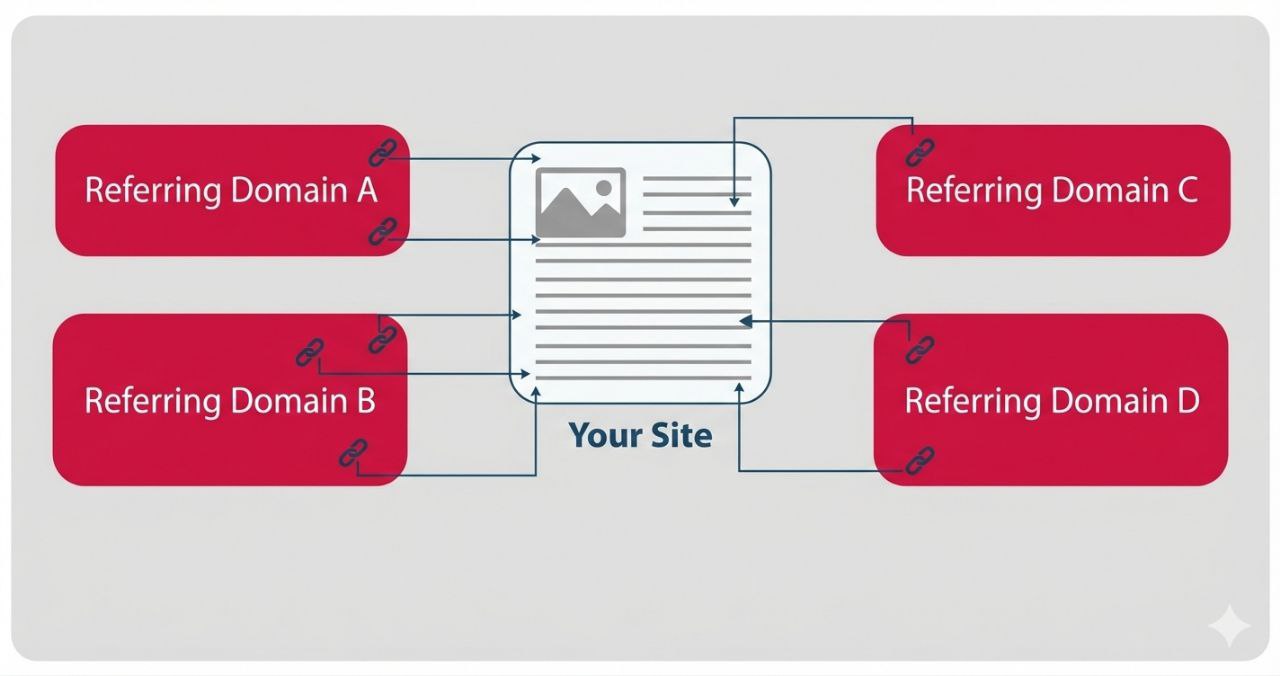
You can also see the number of unique domains linking to your site in the referring domains tab of the backlink analytics tool.
-
Subject validity
Always remember to go for backlinks from websites that are relevant to your site. For example, if you own a travel site, most of the links you get should be from other travel sites, bloggers, travelogue sites, tourism, and the like.
Of course, it’s okay to have backlinks from other sites, but don’t make them your main goal. It’s better for the links to be conceptually relevant. There are other ways to get backlinks or authority, such as:
- Digital PR
- Mentioning the brand name without linking
- Source link
- News surfing
- And …
-
Branding
Google cares about your branding. That’s why branding should be a key part of your SEO strategy and off-page SEO goals. This process ultimately builds online credibility for both users and search engines. But how do you do it, and what are the metrics for success?
-
Brand search
One of the strongest signs that you’re doing well in branding is that your brand is being searched for more than ever before. This could include your brand name, product name, or domain address. To see how your brand’s search volume has changed over time, head over to the Keyword Overview tool and type in your brand name.
You’ll be shown a Trend box that shows how searches for your brand name have changed over the past few months. You can also track brand-related keywords on Google Trends.
-
The Role of Content Marketing in Off-Page SEO
When it comes to content marketing, everyone thinks only about on-page SEO tactics. That is, creating and publishing content on the site. But if we take a broader view, we see that content marketing requires both on-page and off-page SEO. For example, if you write a guest post somewhere, that counts as content marketing.
Using content marketing as an off-page SEO tactic involves creating engaging and engaging content that makes it easier to focus on off-page factors.
Common content marketing tactics that are effective for off-page website SEO include:
- Blog Posts
- Infographics
- Questionnaires, studies, and research
- Electronic books or e-books
Content marketing is intertwined with link building, social media, and PR to help build your brand. Simply put, if you have good content, tell everyone about it.
-
PR or digital public relations
For a long time, PR and SEO were two different marketing disciplines. But in recent years, this distinction has become less clear, and both are used together.
Today, digital public relations(PR) is a link-building tactic that helps you earn authoritative links. You can use PR tactics to promote your content and thereby gain backlinks to your website. A recent study found that each campaign averages 10 to 24 backlinks from the main domain.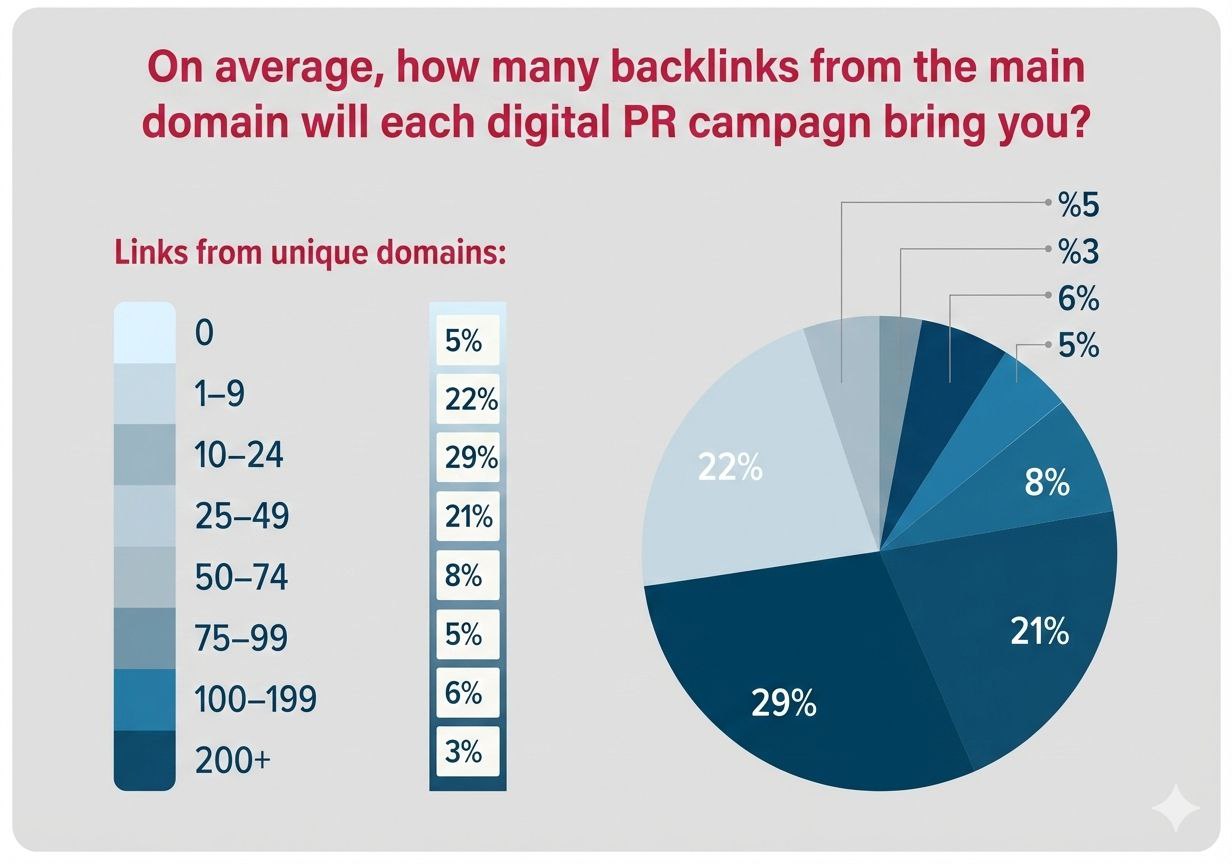
Of course, there’s more to using digital PR for off-page SEO than just getting backlinks. A good PR campaign can:
- Increase brand awareness and consequently increase searches for the brand name
- Put your business in front of your target audience and get them talking about your brand
- Increase site traffic
- Introduce you as a leader in your industry and build trust with your audience
-
Local SEO
Local SEO is an important topic within SEO. But parts of it are also used in off-page SEO. One is Google My Business, and one is citations.
Google My Business! Google My Business plays a vital role in any business’s online presence. It’s important to optimize your page for it and get it indexed to earn more points in off-page SEO.
GMB (Google My Business) is not on your website, and you should not forget to focus all your efforts on the off-page SEO of your website.
Recent research shows that 46% of Google searches are for local business information. And 4 out of 5 search engine users are looking for local information. All these numbers show that if your business is not in Google’s GMB search results, you are missing out on some of the competition.
-
Citations
The term likely refers to a business contact database. A citation is when your business is mentioned somewhere. Of course, not just the name but also the address and contact information are mentioned.
If you’re a local business that wants to target specific regions, this is a tactic you should definitely consider. Citations are a major off-page ranking factor. You can also use Sam’s Rush Listing Management tool to identify your target audience for regional targeting and new opportunities.
-
Social networks
It’s 2025, and we’re in a world where social media is the dominant medium. In fact, 97% of digital consumers use social media.
Social networks play a very important role in our lives. We find answers to many of our questions on social networks. We can even say that they are a kind of search engine or response engine. But keep in mind that virtual networks are not considered a direct factor in SEO.
Once you are active on social media, you will find your target audience and can introduce your services to them. And since your connection with your customers is direct, you can answer their questions. These activities will help you engage with users and increase your brand awareness.
Maintain a strong social media presence, treat your audience professionally, and use these channels to introduce your brand.
-
What is the role of ad reporting in external SEO?
When preparing and using SEO content, it should be noted that the text of the SEO content has no effect on the SEO of the site. The SEO content is only a means of publishing the links it contains. However, the power of backlinks in ad text and the credit they pass from the source site to the destination site have a very positive effect on website rankings.
Links that are included in scientific content are considered the best type of backlinks. If the website that publishes the ad report is in the same field as the ordering website, this effect will be multiplied. News sites usually have high rankings and domain authority. Therefore, the best option for publishing ad reports is news websites, which improve the website’s ranking.
-
Forum or community
You might be surprised to see that forums or communities are still considered a benchmark for off-page SEO. Because so many spam messages and comments have been posted on forums over the years, all their links have been nofollowed. That’s why forums have been ignored for a long time. But it’s better to take a fresh look at communities.
When you consider a broader strategy, forums can add significant value to your business. Instead of using forums as a platform for link building, look at them as a way to answer your users’ questions. To make your brand appear more professional to your audience, it’s best to answer their questions as accurately as possible.
No platform offers the opportunity to hold open discussions and directly engage your audience as a forum does. With a little effort and commitment, you can build a valuable community that builds trust and keeps your audience happy. Forums are no longer as popular as they were in the 2000s, but there is still time to tap into their potential.
-
Influencer Marketing
Influencer marketing will come in many forms in 2025. But if we go back in time, influencers were bloggers who published sponsored and sponsored posts. But these days, we see this concept mainly on Instagram, YouTube, and TikTok.
Note that using influencer marketing to get backlinks is not recommended at all. Because links from sponsored content are against Google’s rules. Influencer marketing can be an effective way to build your brand and reach new audiences.
Creating compelling content is the first step to an effective strategy. But if no one is engaging with your content, all your efforts will be in vain. Finding the right influencer is the next step. This is where influencer marketing and content marketing come together to help you.
-
Events
Hosting an event is a part of your marketing strategy that, believe it or not, can be effective for your off-site SEO. Now more than ever, online events like webinars are being held to help build your business’s brand. Not only can these events engage your audience, but the buzz around them can also help to increase your brand’s visibility and social engagement.
-
Guest post
Guest posting, if done right, can be a huge part of your marketing strategy. Guest posting is when you write about your business on another website or create value for their audience, ultimately leading to brand loyalty.
Although this technique is common for earning backlinks, it is also an effective SEO strategy. If you can choose the right guest website, your target audience will see your brand. As a result, your website will get more traffic, and you will rank higher on the search results page.
In fact, getting links shouldn’t be the only reason you’re writing a guest post. Your main goal should be to reach new audiences, build your brand, and increase visibility on a high-traffic website.
-
Podcasts
Podcasts are currently one of the most popular media in the world. And their popularity is only growing. According to statistics, 44% of Americans have listened to a podcast at least once, and about 73 million people listen to podcasts monthly. Let’s take a look at some of the other benefits of this medium:
- Most businesses haven’t started podcasting yet, which means there’s an untapped market waiting for you. Take advantage of this competitive advantage.
- Podcast advertising is also a great way to reach new audiences, share your expertise, and get found on search engines other than Google.
Businesses that understand that their SEO strategy should cover more than just the Google search engine are much more successful at branding. Find the right platform for your target audience and have a strong presence there.
-
Reviews
Your brand’s reputation in the digital space is more important than ever. Studies show that 93% of people read reviews before making a purchase decision. So managing your brand’s online reputation is not something you can afford to ignore.
Now, if a business offers a product or service that other sites and platforms write reviews for, it will automatically have a positive impact on its off-page SEO. Of course, if the review is positive, all the better.
Brands that achieve strong rankings through review services such as Google’s rating system have a stronger SEO position.
-
The final off-page SEO tactic is content aggregation.
Sometimes, a publisher will look to aggregate content from other websites to produce their own articles. This is much easier for them than creating new, fresh content. Usually, the content that is aggregated in this way is part of a network owned by a television or radio group. But content publishers have increasingly used this technique in recent years to keep their websites alive at a relatively low cost.
Yahoo is one of the biggest platforms that aggregates its content from other websites. The problem with aggregated or syndicated content is that it is often not indexed by Google. Because it is considered a kind of copy. Let’s see what Google has to say about this:
Use scraped content carefully. If you rewrite content from your website on another website, Google will always show the version it thinks is more relevant to the user, not the version you want. When you do this, be sure to include a backlink to your site and the original article.
You can also ask those who want to use your content to add a no-index meta tag to prevent search engines from indexing the pages.
Why do you need off-site SEO?
Without off-page SEO, you will struggle to compete on the search results page. Think of off-page SEO as a way to build your site’s authority. Without it, you won’t be able to compete. Content on higher authority websites will typically rank higher on the search results page than other sites.
In general, links are what signal to Google that your website is recommended by other sites. Links are one of the three most important Google ranking factors, and not including them in your SEO strategy will cost you dearly.
But if you focus all your attention on link building, you’re making a mistake. There are other off-page SEO techniques to consider. They may not be as effective as links, but they will build your brand’s credibility.
Link building is an easy way to manipulate and trick search engine algorithms. Many spammers exploit this by creating link networks and building structures, a practice now known as black hat SEO. Google has become very good at identifying black-hat SEO techniques. By releasing several updates to its search algorithms, Google has managed to control this problem and protect search results for SEO content from spam. But as technology advances, the big game continues.
The most important black hat SEOs include the following:
- Panda: Originally released in February 2011, it targeted low-quality websites and content farms.
- Penguin: This SEO update, introduced in 2012, became widely known for targeting link farms, low-quality links, and over-optimized text.
Final words
Generating traffic to a website requires more than just content and on-page optimization. It’s great to see a website design that uses appropriate H1 headers, incorporates powerful keywords, and includes a few internal links throughout. However, to boost your website’s ranking, you also need to focus on building an effective off-page SEO strategy.
If off-page SEO is done correctly, the website will automatically start earning money from backlinks, improving search engine rankings, and boosting the website’s ranking. In simple terms, instead of working harder, we should work right.
Site design and SEO are typically done to optimize the site. Building high-quality links can significantly contribute to the site’s branding and sustainability. External SEO can be achieved through activity on various social networks. Social networks such as Facebook, Google Plus, Twitter, and LinkedIn have a good impact in this field. High-quality content should be produced, and SEO content should be published at specific intervals on the website and other social networks.
Activity in these environments is effective only if there are many followers. SEO content should be published to encourage sharing. Comments and likes on SEO content should be in such a way that Google realizes that useful activity is taking place. Social media activity is a significant part of external SEO, and when executed effectively, it can improve the website’s ranking.